
 Image 1 of 1
Size Group:
Bottle Text:
Actual Size: 3 3/8 T x 2 3/4 W
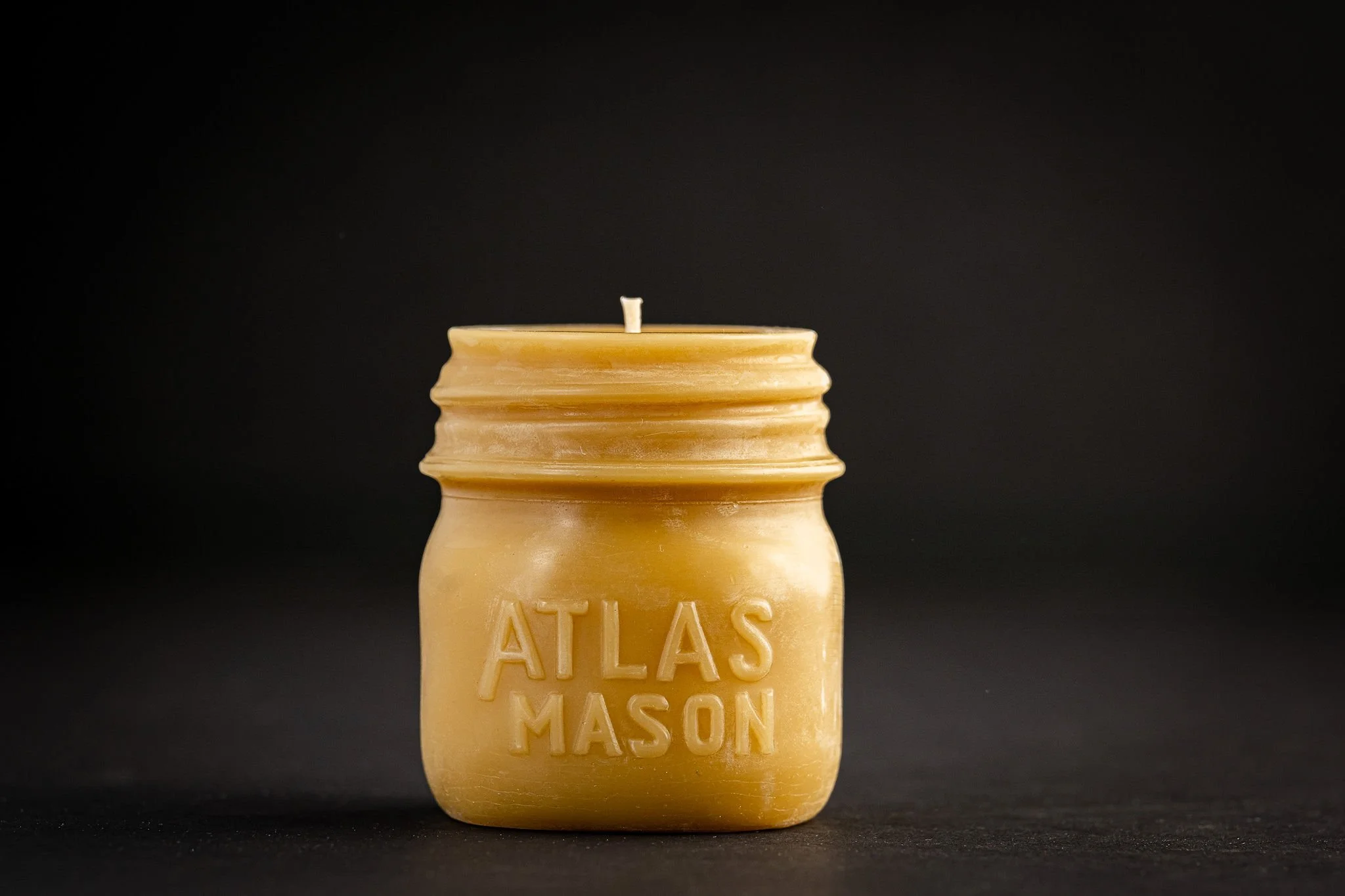
Description: This is a beautiful stout pillar molded from an old canning jar. The screw top lid has lots of character and is iconic of this style of Depression-era masons. This candle is an amazing burn, and if burned correctly, will hollow out and leave behind the shell of the jar. circa - 1930
Burning Note:
The thicker the candle is, the longer burn sessions it requires. I recommend burning this candle for no less than 3 hours at a time and upwards of 5, 6, + hours. The reason for this is that the heat of the flame needs time to melt away the walls and feed the wax pool, so give it time to get the greatest value. You can also “kneed” or press the warm lip of the candle in to get the walls to melt in faster and more efficiently. Trimming the tip of the wick before each new burn is also beneficial. You can even nip the brittle end of the cold candle wick with your thumb nail. This eliminates any accumulation of carbon, burnt honey, pollen or propolis from the fabric and allows for a healthy flame and flow of wax.
Size Group:
Bottle Text:
Actual Size: 3 3/8 T x 2 3/4 W
Description: This is a beautiful stout pillar molded from an old canning jar. The screw top lid has lots of character and is iconic of this style of Depression-era masons. This candle is an amazing burn, and if burned correctly, will hollow out and leave behind the shell of the jar. circa - 1930
Burning Note:
The thicker the candle is, the longer burn sessions it requires. I recommend burning this candle for no less than 3 hours at a time and upwards of 5, 6, + hours. The reason for this is that the heat of the flame needs time to melt away the walls and feed the wax pool, so give it time to get the greatest value. You can also “kneed” or press the warm lip of the candle in to get the walls to melt in faster and more efficiently. Trimming the tip of the wick before each new burn is also beneficial. You can even nip the brittle end of the cold candle wick with your thumb nail. This eliminates any accumulation of carbon, burnt honey, pollen or propolis from the fabric and allows for a healthy flame and flow of wax.